Asia stocks climb tracking Wall St rally; Nikkei hits record high, China GDP beats
Investing.com - U.S. consumer price growth accelerated sharply in March, largely driven by a spike in energy costs due to the Iran war, although the increase had been widely anticipated by markets.
In the twelve months to March, the consumer price index rose by 3.3%, compared to 2.4% in February and economists’ expectations of 3.4%. It was the largest increase since June 2022, when oil prices were rocketing higher in the wake of the outbreak of the war in Ukraine.
Month-on-month, the closely-tracked inflation gauge from the Labor Department jumped by 0.9%, versus 0.3% in the preceding month. The figure was seen at 1.0%.
Energy prices, in particular, spiked by 12.5% on an annualized basis, up dramatically from 0.5% in February. Inflation last month has been in sharp focus because it was the first period to include the impact from the conflict in Iran, which began with joint U.S. and Israeli strikes in Tehran in late February.
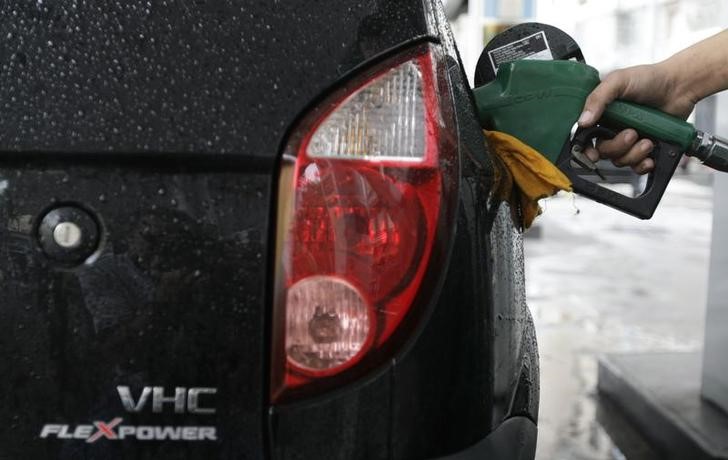
One of Iran’s responses to the attacks was to all but shutter tanker traffic through the Strait of Hormuz, a vital waterway south of the country through which roughly a fifth of the world’s oil flows. Although the U.S. is a net exporter of oil, crude prices are set globally, contributing to a rise in average retail gasoline pump prices above $4 a gallon for the first time in more than three years.
However, stripping out volatile items like food and fuel, so-called "core" CPI stood at 2.6% year-on-year and 0.2% month-on-month, both slower than forecast.
Given the relatively tepid core reading, analysts have suggested that the Federal Reserve, which relies on inflation metrics when setting interest rates, may choose not to put too much weight on Friday’s consumer-price index.
Still, some fears abound that prolonged fighting in the Middle East could lead households to pull back on spending, potentially darkening the outlook for the labor market in the process. Job gains, the other key policy pillar for the Fed, showed a sharp rebound last month, underpinning hopes that the employment picture is stabilizing.
With inflation firming, some economists do not expect the Fed to reduce borrowing costs in 2026, while some officials at the central bank have flagged that a hike may even be necessary.
Earlier this week, U.S. President Donald Trump announced a temporary ceasefire with Iran, although the longevity of the halt to hostilities remains uncertain as Israel continues to bombard Tehran-aligned Hezbollah militants in Lebanon. Shipping activity through the Strait of Hormuz is also still limited, media reports have said.
Brent crude futures, the global benchmark, and U.S. West Texas Intermediate crude have both dropped after the ceasefire, yet are hovering well above pre-war levels.
"[E]ven if the two-week truce between the U.S., Israel and Iran holds and oil prices fall over the coming months, the price data suggest that it will be a long time yet before the Fed can consider cutting interest rates again," said Stephen Brown, Chief North America Economist at Capital Economics, in a note.

